On Monday, I shadowed Dr. Fenster during hysteroscopic procedures for the removal of fibroids similar to last week. Following, we had a meeting where we presented our findings from literature review. We were particularly interested in procedural protocols and specific techniques, so we focus our next presentation on these aspects throughout the week. On Tuesday, I accompanied Dr. Fenster in primary care, where she follows up with patients post-surgery in addition to performing smaller scale procedures. I observed a more point-of-care approach to remove fibroids and polyps, which offered an interesting comparison to the experience in the OR. Moreover, observing patient consultations provided valuable insight into the broader scope of outpatient OBGYN care. Lastly, on Friday, I had the opportunity to observe Dr. Fenster perform two hysterectomies. The procedure was more time-intensive than fibroid removals, and since this was my first time witnessing this surgery, I was particularly fascinated by how the uterus was accessed through a single incision at the umbilicus. I was even asked to assist Dr. Fenster for a small portion of the procedure, so I also learned how to properly scrub in and participate in the surgical environment.
Friday, June 13, 2025

Week 2: Teagan
This week, I got the opportunity to start the clinical aspect of the immersion term. On Tuesday, I was able to meet Dr. Bostrom to discuss my research background and schedule days to shadow in the operating room (OR). In the afternoon, I was also able to go to the clinic with Dr. Bostrom and see how he interacts with patients. Dr. Bostrom is an orthopedic surgeon focused on hips and knees, so I got to observe both pre-operative consultations and post-operative check-ups for those cases. Some of the post-operative appointments focused on addressing pain and discomfort experienced by patients as a result of the procedures. It was interesting to see the steps the team took to understand how to best help their patients heal better and faster. One thing I noticed was that at each appointment, Dr. Bostrom sat down to be at eye level with each patient and made sure to address all their questions/concerns, ensuring they didn’t feel rushed.
I also observed surgeries in the OR on Wednesday. I got the chance to see a total knee replacement, a total hip replacement, and knee revision surgery. For these surgeries, they create a sterile zone by pulling out panes of plastic to section off the part of the room used for the operation. When I observed, I stayed on the outside of the sterile zone and was free to move around to view the operation from different angles. Dr. Bostrom was able to do the total hip and knee replacements in about 30 minutes, which was much faster than I was expecting for such an invasive procedure! The revision surgeries took much longer, ~2 hrs.
For the research portion of this experience, I downloaded the appropriate software and got trained on how to operate the 3D printer by Dr. Chen. I also continued working on my mouse facility training to get access to the Faxitron x-ray imaging machine.
Week 2: Wendy Zimmerman
This week I spent some time working on a grant for a collaboration with Dr. Rodeo's lab. I really enjoyed working on figuring out how I could connect my project back in Ithaca to translational studies that can be done in Dr. Rodeo's lab, with his access to human samples. Additionally, I finally got to meet Dr. Rodeo during the lab meeting and hear ways I could potentially help on other projects within the lab. I also attended the Biomechanics meeting again this week, which was a talk given by Japheth Omonira in the Itai Cohen lab on creating a model for shear forces in cartilage. With the lab I also attended HSS's first Eid ul-Adha celebration and got to meet a variety of workers within HSS. In terms of research, I have begun examining the RNA Seq data to compare the differentially regulated genes across conditions after completing some background reading to understand how to examine the data. I have also contacted the schedule managers of Dr. Rodeo and Dr. Eliasberg and will be shadowing Dr. Eliasberg next week. Finally, I will also be shadowing some mouse shoulder impingement surgeries next week, which allow me to see the way a different lab induces tendinopathy.
Week 2: Peter
This week has been pretty slow. The procedure I was to shadow this week got pushed back to the 24th as the patient had not stopped taking a certain medication. I have been doing a lot of background reading and have some cells to take care of now. The goal is to get a flow experiment started up next week so I'm super excited to learn that technique. I also shadowed some more mouse work. In the clinic, I saw some patients with varying levels of maladies. One had a pancreatic neuroendocrine tumor that while not malignant had shown a potential to grow. This patient will be getting surgery in July. Another patient had a tumor around their hepatic artery so it is currently inoperable. Hopefully chemo is able to turn it around.
Week 2: Brenda
This week has been very busy, but also very exciting! On Monday I got to shadow at the clinic and watch Dr. Carli and his PA (hi Lexi!) attend patients. It was interesting to see and learn about how to greet patients a certain way due to religious beliefs or a patients preference. Kind of like reading the room. I then got quizzed on anatomy by my clinician, and learned a lot on how to prep patients for knee/hip surgeries. It is very interesting because the implants are not a one-size-fits-all type of situation, so there is a variety of hip and knee implant sizes. I also got to meet some of Dr. Carli's regulars and hearing them all communicate in Italian (I speak Spanish so I understood some words).
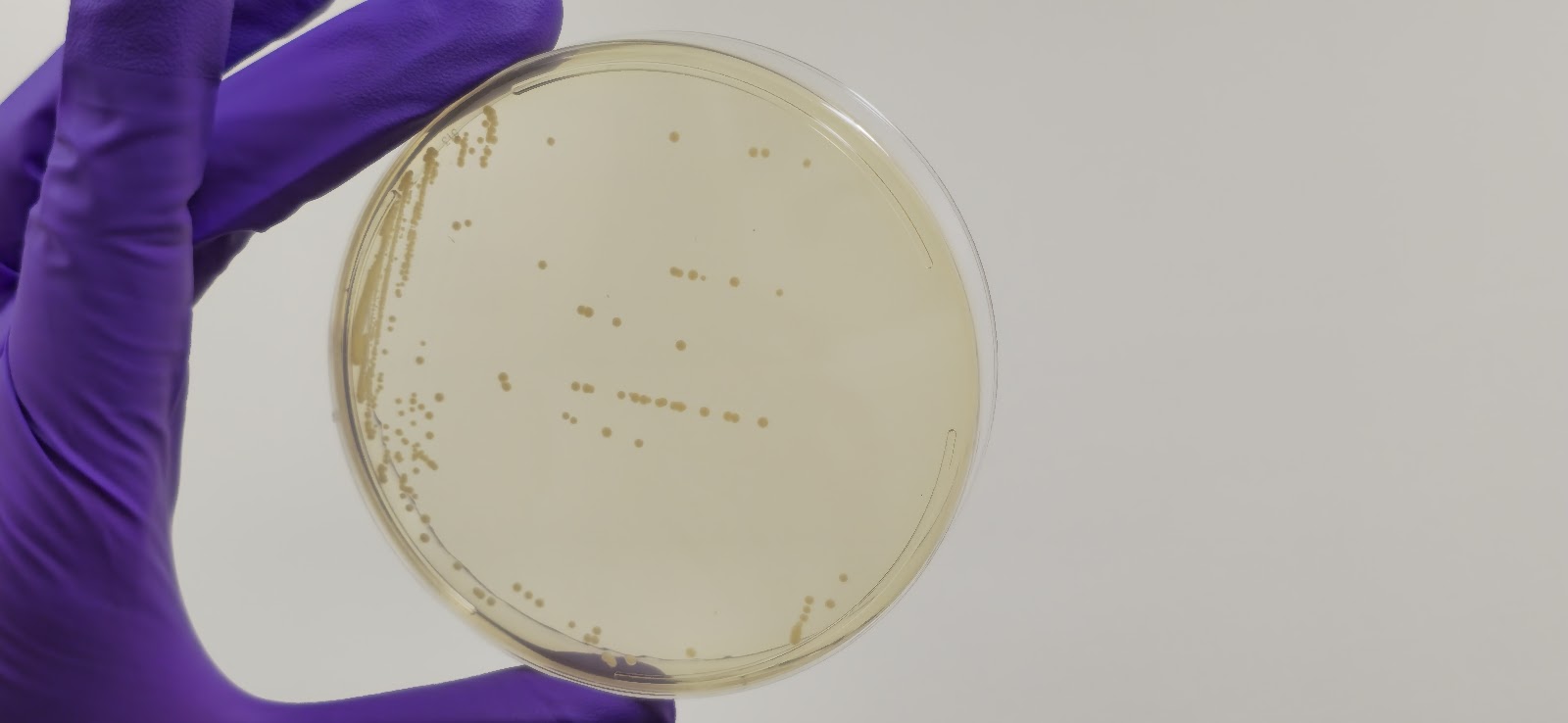
On Tuesday I attended weekly meetings and got to do some work in the lab. I had a typo on my last blog post, I am working on PJI but on implants used in humans (not on mice)! So I will be growing bacteria on implants and understanding how to remove the biofilm completely off of them, kind of replication what would occur to a patient. I have been re-learning a lot of my microbiology lab skills - I have not really touched on them since when I took microbiology in 2017, but still excited I remembered a lot!
On Wednesday I shadowed Dr. Carli at the OR, it was my first time being in an operating room! I got to shadow both a hip and a knee replacement. I found it very interesting getting to learn the protocol before the operation begins. I was told that the operations sound like a construction site, and they do. Dr. Carli does a great job on keeping me in the loop during surgeries and will sometimes show me pieces of bone being taken out of patients.
Thursday and Friday are both lab days. Since I am working with bacteria, a few days is necessary to let them grow. I actually got to touch and get to feel the implants used in knee and hip replacement surgeries, they are a lot thicker and heavier than I thought! Overall, I learned so much on assisting patients pre-operation, post-operation, and during operation. Learning on how to fix implants on these patients, learn about anatomy from x-ray scans but also in real life at the operating table.
My weeks here at immersion will look along these lines as its all on a fixed schedule with Dr. Carli.

Thursday, June 12, 2025
Week 2: Anuj
The robotic surgeries performed this week by Dr. Scherr included three prostatectomies and a ureter reconstruction. The robotic surgery involves several biomedical engineering tools integrated medicine. Here are a few features of the whole system that I noticed this week. There is an endoscope camera inserted into one of the ports within the body which helps surgeons visualize the internal tissues, and this is the way in which they maneuver the robotic arms (tweezers, forceps, blades, cauterizing forceps) through the tissues/organs. These cameras are equipped with air suction on the surface, to remove vapor on the camera lens that can arise from tissue cauterizing. Similarly, the surgeon’s chair with the VR view, actually has a 3D projection of the camera, therefore making it easier to perform the surgery and mimic the motions using the robot.
The non-robotic
surgery included one pelvic tumor mass removal. This surgery was performed with
two vascular surgeons present because of the complexities involved with mass
tumor’s angiogenesis and integration with the surrounding tissue, which must be
carefully dissected during the mass removal. The mass was approximately 4 cm in
diameter, but was only attached to few vessels, which made the surgery easier. Besides
surgery, I reviewed several existing papers and patents on wide-view cystoscopes and camera integrated catheters for my other project.
Week 2: Joe Denisco
I shadowed my first surgery ever (on my 24th birthday!). Anuj brought Hamilton and I to Dr. Scherr's procedure: a robot-assisted total prostatectomy. It was amazing to see the complexities of surgery first-hand, especially with the advancement of robotic surgery. Four metal tubes were inserted into a man's inflated abdomen, (as to not damage any internal tissue), in which the robotic arms slotted into. Two doctors sat on the sideline operating on the patient through controllers and VR headsets, their deft movements accurately reflected. Dr. Scherr vocalized each step and relevant anatomy, providing an excellent learning experience. In research, I continued with my histologic stainings and standardizing our sectioning procedure to provide consistent and region-specific samples. I'm looking forward to more surgeries and continuing sectioning samples at different time points within the collagenase treatment model.
-
The final week of immersion, included some last minute tidying up. I took all of the reagents used throughout the summer into their designa...
-
Compared to last week, this week was more research-oriented than clinic-focused. When meeting with patients this week, I saw a couple intere...
-
This week I with Christina, one of the lab techs between Dr. Carli and Dr. Bostrom. We prepared screws that have biofilm on them for SEM at ...
